
Telematics and fleet management software are closely connected, which is why the terms are sometimes used as if they mean the same thing. For a trucking fleet, though, they perform different jobs.
Telematics primarily collects and transmits information from trucks and connected devices. Fleet management software brings that information together with drivers, maintenance, compliance, reporting, documents, and other operational workflows.
For many carriers, the real value comes when the vehicle data and the management tools work together instead of sitting in separate systems.
Telematics Vs. Fleet Management Software At A Glance
The easiest way to understand the difference is to look at where the information starts and what happens after it reaches the fleet office.
|
Category |
Telematics |
Fleet Management Software |
|
Primary Purpose |
Collect and transmit vehicle data |
Manage fleet operations |
|
Main Data Source |
Trucks, GPS, sensors and connected devices |
Telematics plus operational records |
|
GPS Location |
Common capability |
Displays and uses location data |
|
Engine Diagnostics |
Can capture fault information |
Helps teams review and act on faults |
|
Driver Activity |
Can capture driving events |
Helps manage drivers and trends |
|
Maintenance |
Supplies mileage, hours and faults |
Supports schedules, records and alerts |
|
Compliance |
Supplies vehicle and driver data |
Organizes compliance workflows |
|
Reporting |
Depends on the system |
Usually broader across fleet operations |
|
Hardware |
Usually required |
Not necessarily required by itself |
The boundary is not absolute. Modern fleet platforms often include both telematics and fleet management capabilities in the same system.
What Is Fleet Telematics?
Fleet telematics uses connected technology to collect information from trucks and make that data available remotely. Information may come from GPS, a vehicle diagnostic connection, a camera, an ELD, or another connected sensor.
This is why fleet telematics is broader than simple vehicle tracking. Location is important, but vehicle activity, diagnostics, driver information, and connected equipment can all become part of the telematics picture.
What Data Can Fleet Telematics Collect?
The exact data depends on the system installed on the truck. Common examples include:
- GPS location and route history
- Odometer and mileage
- Engine hours
- Vehicle speed
- Idling activity
- Driving events
- Engine and vehicle fault codes
- Fuel related information
- Dashcam events
- Data from connected sensors
For example, seeing an engine alert remotely gives the office earlier awareness, but understanding what a DTC actually means is still important because a fault code provides a diagnostic starting point rather than automatically identifying the part that needs replacement.
How Telematics Data Reaches The Office
A telematics device or connected system gathers information from the truck. Depending on the setup, that information can come from the diagnostic port, GPS receiver, vehicle network, camera, or another sensor.
The data is then transmitted through a cellular connection to a cloud platform where drivers, dispatchers, safety teams, or fleet managers can access it through an app or web portal.
Instead of waiting for a truck to return to the yard, the fleet can see useful information while the vehicle is still working.
What Is Fleet Management Software?
Fleet management software deals with the broader operation around the vehicle.
It can combine telematics data with maintenance schedules, driver records, compliance information, documents, reports, fuel records, route history, vehicle activity, and other business information.
What Fleet Management Software Handles Beyond Telematics
A truck might transmit an odometer reading through telematics. Fleet management software can connect that mileage with a service interval and help the maintenance team see that a truck is approaching scheduled work.
The same principle applies throughout the operation. Raw information becomes more valuable when it is placed in the context of a specific truck, driver, route, maintenance need, or compliance requirement.
The Main Differences Between Telematics And Fleet Management Software
The two technologies often overlap, but their primary roles are different.
Understanding that distinction helps fleets compare systems based on what they actually need rather than the terminology a provider uses.
Data Collection Vs. Data Management
Telematics focuses heavily on collecting and transmitting information from trucks and connected equipment.
Fleet management software helps organize that information and combine it with the rest of the operation. Managers can use the resulting data for reporting, maintenance planning, compliance, dispatch, safety, and other daily decisions.
Vehicle Data Vs. Fleet Operations
Telematics generally starts with the vehicle.
Fleet management software looks beyond one truck. It connects information across vehicles, drivers, maintenance records, routes, documents, compliance activity, and other fleet processes.
Connected Hardware Vs. Operational Workflows
Telematics often depends on hardware or connected equipment in the vehicle. That may include an ELD adapter, GPS system, dashcam, diagnostic connection, or sensor.
Fleet management software turns information from those systems into something the business can use. The software may create histories, alerts, reports, vehicle records, or workflows for the people running the fleet.
Current Activity Vs. Historical Context
Telematics is particularly useful for knowing what is happening with a vehicle now. A manager may see where the truck is, whether it is moving, what route it has taken, or whether a fault has appeared.
Fleet management software can add historical context. That may include previous routes, driver activity, documents, maintenance records, fuel information, and past vehicle events.
GPS Tracking Vs. Telematics Vs. Fleet Management Software
GPS tracking is one part of telematics, not another name for the entire system.
A basic GPS system answers a focused question: Where is the truck?
More complete GPS fleet tracking becomes more useful when location is connected with route history, driver availability, vehicle activity, IFTA mileage, diagnostics, and other trucking data.
Telematics expands the picture further by collecting different kinds of vehicle information. Fleet management software then helps the business decide what to do with that information.
One useful way to think about the three is:
GPS Tracking: Where is the truck?
Telematics: Where is the truck, and what is the vehicle reporting?
Fleet Management Software: How does that information affect the rest of the operation?
How Telematics And Fleet Management Software Work Together
The difference becomes clearer when vehicle data is followed through a real trucking workflow.
The data starts with the truck. Telematics gets that information to the fleet. Fleet management software gives it operational context.
Maintenance
Suppose a truck reports a fault while several hundred miles from the terminal.
Telematics makes the fault visible remotely. Fleet management software can connect the event with the unit, route, mileage, previous activity, and maintenance information so the team has more context before deciding what needs to happen next.
Dispatch
Location data alone tells dispatch where a truck is.
When location is combined with available driver hours, route history, delivery progress, and vehicle information, dispatch can make a better decision about whether that truck is actually a good fit for the next load.
Safety
A connected dashcam can capture video from a crash, harsh driving event, parking incident, or driver initiated recording.
When video is tied to location and vehicle activity, the safety team gets more than an isolated clip. It gets context around where and when the event happened and which vehicle was involved.
IFTA
Telematics can capture GPS movement, odometer information, and state line crossings as the truck moves between jurisdictions.
Those data points become more useful when IFTA mileage tracking organizes miles by state alongside driver submitted fuel receipts, giving the back office cleaner information for quarterly reporting instead of rebuilding routes manually.
Compliance
ELD data is another good example of the overlap between telematics and fleet management.
An ELD platform can capture driving time and vehicle information while also giving drivers tools for HOS logs, DVIRs, documents, fuel receipts, and other compliance workflows. The vehicle supplies data, but the broader platform helps drivers and office teams use it.
Do You Need Telematics, Fleet Management Software, Or Both?
The right answer depends on what problem the fleet is trying to solve.
If the main requirement is knowing vehicle locations, reviewing routes, or receiving basic diagnostic data, a telematics focused system may cover much of what the fleet needs.
Fleet management software becomes more important when the business also needs to manage drivers, maintenance, compliance, reporting, documentation, vehicle history, and planning.
For many trucking companies, keeping both capabilities in a connected platform makes the most sense. It reduces the need to move information manually between systems or rely on drivers and office staff to reenter data that has already been captured elsewhere.
Fleet Management Software Vs. TMS
Fleet management software is also different from a Transportation Management System, or TMS.
Fleet management software focuses mainly on the equipment and people operating it. That includes vehicles, drivers, maintenance, safety, compliance, location, and fleet data.
A TMS generally focuses more heavily on freight operations such as loads, orders, customers, rates, dispatch, billing, and transportation planning.
A trucking company may use both, particularly when fleet operations and freight management require different workflows.
How Blue Ink Tech Connects Telematics And Fleet Management
Blue Ink Technology is built around connecting the information coming from trucks with the tools drivers and fleet managers use every day.
BIT ELD, BIT Dashcam, BIT Air Scale, IFTA tools, GPS location, route history, fault information, driver availability, documents, and receipts can work within the same broader fleet ecosystem.
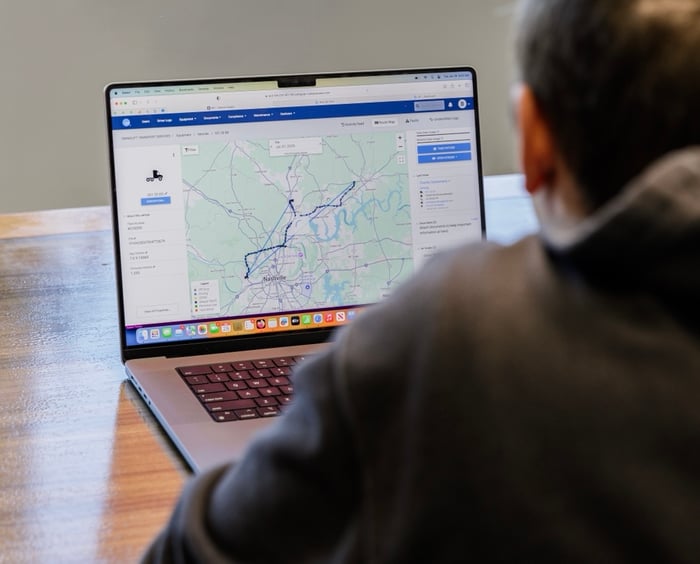
For example, BIT Location connects live vehicle positions with historic routes, Available Hours information, vehicle feeds, fault code logs, and document activity. Location therefore becomes useful operational information rather than simply a dot on a map.
That same connected approach applies across the wider platform. Drivers can handle compliance and documents while the office gets visibility into vehicle activity, routes, diagnostic information, weights, video, and reporting.
The goal is not to collect as much data as possible. It is to make the right information available when a driver, dispatcher, safety manager, or back office team needs it.
Blue Ink Tech also provides in-house U.S. based support from West Virginia, keeping product support close to the people who build and work with the technology.
What To Look For When Comparing Fleet Technology
Do not choose a system based only on whether the provider labels it telematics or fleet management software.
Look at how well it supports the actual work your fleet performs. Depending on the operation, important capabilities may include:
- Live GPS and route history
- Engine diagnostics
- ELD and HOS support
- Driver availability
- IFTA mileage tracking
- DVIR workflows
- Dashcam integration
- Maintenance visibility
- Document and receipt capture
- Reporting and exports
- API integrations
- Driver usability
- Responsive support
The strongest system is not necessarily the one with the longest feature list. It is the one that reduces manual work and gives drivers and office teams useful information without making their jobs more complicated.
Final Thoughts: Vehicle Data Is Only Useful If You Can Act On It
Telematics and fleet management software solve different parts of the same problem.
Telematics gives a fleet access to information coming from trucks, drivers, and connected devices. Fleet management software puts that information into the wider operational picture so people can use it for maintenance, compliance, safety, dispatch, and planning.
For many trucking companies, the decision is not really telematics versus fleet management software. The more important question is how well the two work together.
When vehicle data, driver information, compliance tools, routes, diagnostics, and reporting stay connected, fleets can spend less time moving information around and more time acting on it.
FAQs
What Is The Difference Between Telematics And Fleet Management Software?
Telematics primarily collects and transmits information from vehicles and connected equipment. Fleet management software organizes vehicle data alongside drivers, maintenance, compliance, documents, reports, and other fleet operations.
Is Telematics The Same As Fleet Management?
No. Telematics supports fleet management by providing vehicle data, but fleet management covers a much broader set of responsibilities involving vehicles, drivers, safety, maintenance, compliance, and operations.
Is GPS Tracking The Same As Telematics?
No. GPS tracking provides location information and is one component of telematics. A telematics system can also collect mileage, diagnostics, engine information, driver events, and data from other connected equipment.
What Data Does A Fleet Telematics System Collect?
Depending on the system, telematics can collect GPS location, mileage, odometer readings, engine hours, fault codes, speed, idling, driving events, route activity, and information from connected sensors or cameras.
Does Fleet Management Software Include Telematics?
Some fleet management platforms include telematics directly, while others receive vehicle data through connected devices or outside integrations.
Can Telematics Work Without Fleet Management Software?
Yes. A basic telematics solution may provide vehicle location or other vehicle data without a broader fleet management platform. However, larger operations often need software to organize that information alongside maintenance, drivers, compliance, and reporting.
Which Is Better, Telematics Or Fleet Management Software?
Neither is automatically better because they perform different jobs. Telematics is useful for collecting and transmitting vehicle data, while fleet management software helps fleets use that information operationally.
Is An ELD A Telematics Device?
An ELD can provide telematics capabilities when it connects with vehicle systems and transmits information such as location, mileage, diagnostics, and driver activity. The exact capabilities depend on the ELD provider.
How Does Telematics Help With Fleet Maintenance?
Telematics can provide mileage, engine hours, diagnostic faults, and vehicle activity without waiting for a truck to return to the terminal. Maintenance teams can use that information to identify issues, plan service, and investigate recurring problems.
What Is The Difference Between Fleet Management Software And A TMS?
Fleet management software focuses mainly on vehicles, drivers, maintenance, safety, compliance, and fleet data. A TMS focuses more heavily on freight operations such as loads, orders, rates, customers, dispatch, and billing.