
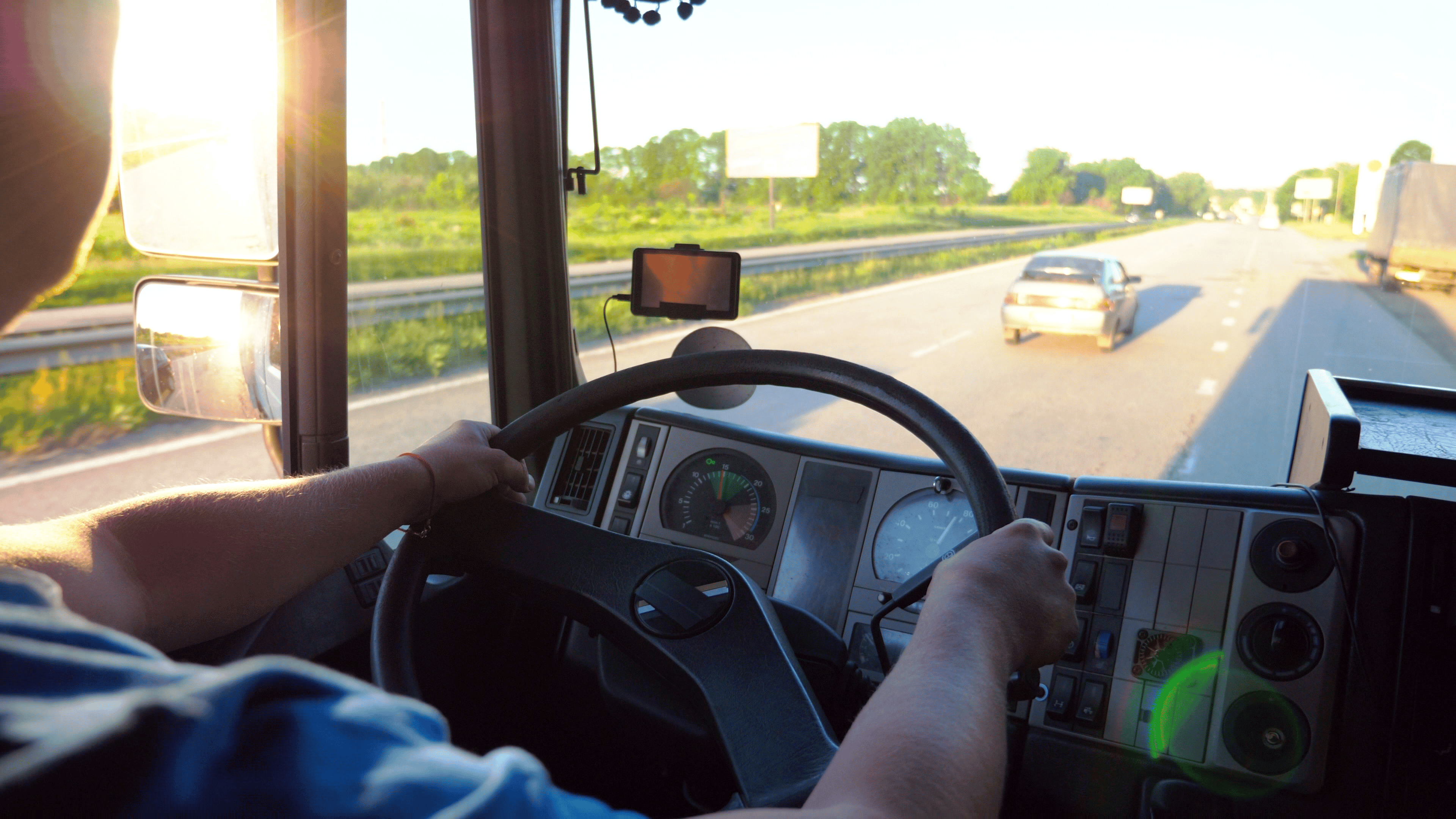
Space cushion driving is a defensive driving technique that focuses on one thing: keeping a safe buffer of space around your vehicle so you have time to react and room to maneuver. For commercial drivers, that buffer is not a “nice to have.” It’s how you avoid panic braking, sudden swerves, close calls in blind spots, and chain-reaction crashes when traffic does something unpredictable.
Think of your space cushion as your working safety zone. You manage it constantly, front, rear, and side, because conditions constantly change. A car dives into your lane. A work zone squeezes lanes. Rain starts pooling. Traffic compresses. Your job is to keep enough space to handle any of that without drama.
This guide breaks down what space cushion driving is, why it matters more in a truck, and how to build it in real-world situations without slowing operations to a crawl.
What is space cushion driving?
Space cushion driving means maintaining a safe buffer of space around your vehicle, especially in front of you, to reduce the chances of a collision and give you options if something goes wrong. That buffer creates reaction time, smoother braking distance, and an escape route when someone else makes a mistake.
It’s not one fixed distance. It changes based on speed, traffic density, visibility, load weight, road surface, and weather. The goal is simple: always have enough room to slow down or steer safely without relying on other drivers to do the right thing.
Why it matters more in a truck?
A passenger vehicle can often “get away with” poor spacing until it can’t. A commercial vehicle has fewer second chances.
Your stopping distance is longer. Even with modern braking systems, a heavy truck needs more room to slow down than a car at the same speed. When you follow too close, you’re betting that the vehicle ahead won’t brake hard, that no one will cut in, and that the road surface won’t change. That’s a losing bet over time.
Your vehicle also has larger blind spots. A tight side cushion makes lane changes riskier for you and for the vehicles hovering near your doors or quarter panels.
And then there’s the business reality. Dispatch pressure, tight docks, appointment windows, and traffic delays can push drivers into “make-up time” driving like tailgating, late braking, and squeezing gaps. Space cushion driving is one of the clearest ways to lower risk without needing perfect conditions.
The front cushion
If you do nothing else, protect the space in front of you. Front cushion is your main safety asset because it gives you time to see trouble early and brake gradually.
Use a time-gap method, not a “car length” guess
Counting car lengths is unreliable because speed changes constantly. A time gap is more consistent.
Pick a fixed point ahead like an overpass shadow, a signpost, a crack in the pavement. When the vehicle in front passes it, start counting. If you reach that same point before you finish your count, you’re too close. If traffic gets faster, your time gap still protects you. If traffic slows, your gap naturally shortens without you having to micromanage distance.
In heavier traffic, you may feel like any space you leave will get filled. Sometimes it will. That doesn’t mean the cushion is pointless. It means your job is to rebuild it every time it gets taken.
When someone cuts in, rebuild calmly
Cut-ins happen. The mistake is reacting with frustration or “closing the door” to stop it. That usually increases risk.
Instead, ease off and rebuild the gap. Make it a routine response. The driver who cut in may be impatient, lost, or simply unaware. Your job is to keep your vehicle stable and predictable.
Front cushion mistakes that create risk
One of the biggest mistakes is “pushing” traffic. When you ride the bumper of a slower vehicle to try to encourage them to speed up, you lose your reaction time and your smooth braking window. That’s how minor slowdowns become harsh brakes, which becomes a rear-end risk from vehicles behind you.
Another common mistake is waiting too long to slow down when you see brake lights two or three vehicles ahead. A space cushion gives you time to roll out of the throttle early so your speed changes are gradual and easy for following traffic to read.
And in changing conditions like rain, spray, fog, nighttime glare the front cushion is where you buy visibility. If you can’t see far, you can’t drive as if you can.
The rear cushion
Rear cushion means managing what’s happening behind you so you can brake safely without getting hit.
You can’t control a tailgater, but you can control how you respond. If a vehicle is too close behind you, the safest move is usually to increase your front cushion even more. That way, if traffic slows, you can brake gently and give the tailgater time to react.
Avoid sudden braking to “send a message.” It doesn’t educate anyone. It just raises your risk.
If you have the option to let an aggressive driver go around by maintaining a steady speed, staying predictable, and choosing lanes wisely you should do it. Your goal is to remove pressure from the situation, not win an argument on the road.
The side cushion
Side cushion is the space beside you that keeps you out of tight, trapped positions. Side collisions often happen because drivers camp in blind spots, drift slightly, or misjudge the speed difference during lane changes.
Don’t live in blind spots
If you’re alongside another vehicle, either pass with purpose or fall back. Hanging beside a vehicle, especially around their rear quarter panel, is a problem because you have fewer options if they drift or need to move.
For commercial drivers, side cushion also includes thinking ahead at merges. A vehicle entering from a ramp may try to match speed and slide into the first gap they see. If you can adjust early, either by creating space or moving away from the merge lane, you prevent last-second squeezes.
Keep an “out” when possible
You won’t always have an open lane next to you, but you can often avoid getting boxed in. If traffic is dense, try not to sit between two vehicles with no exit. If you can position yourself so one side stays more open, you keep an escape route available if something changes in front.
Space cushion in real-world commercial driving
Space cushion driving sounds simple until you’re in the mix. Here’s how to apply it where it matters most.
City traffic and stop-and-go
Stop-and-go driving creates constant cut-ins and unexpected braking. Your space cushion will get taken repeatedly. That’s normal.
The key is to treat rebuilding the gap as part of the job. Ease off early. Brake smoothly. Leave room so you’re not forced into hard stops. In dense urban traffic, you’re not trying to keep a perfect cushion every second. You’re trying to avoid the “accordion effect” where everyone overreacts and the whole lane becomes a hard-brake chain.
Highway merges and ramps
Merges are where front and side cushions get squeezed at the same time.
Scan early for ramps and heavy merge zones. If it’s safe and legal to move over before the ramp, do it. If you can’t, adjust speed slightly to create a clear slot for merging traffic. That’s often safer than holding speed and hoping drivers “figure it out.”
Your goal is to prevent the last-second merge where someone forces their way in and you have no room to respond.
Passing and being passed
When you pass, commit and clear the vehicle. Don’t linger beside them. If you’re being passed, stay predictable. Sudden speed changes compress spacing and invite mistakes.
In heavy traffic, keep enough front cushion so you’re not trapped between a slow vehicle ahead and a fast vehicle beside you. That’s how minor events turn into no-win situations.
Work zones and narrow lanes
Work zones reduce your side cushion and limit escape routes. That means you protect your front cushion even more.
Slow earlier than you think you need to. Keep your lane position steady. Avoid unnecessary lane changes. When lanes are tight, smooth inputs matter, gentle steering, gradual braking, and calm speed control.
Bad weather and low visibility
In rain and spray, traction changes and visibility shrinks. Water on the roadway can hide hazards, and spray from vehicles ahead can remove your sightline.
Your best defense is more time and more room. Increase your time gap. Slow earlier for traffic changes. Avoid quick steering. If conditions reduce visibility, drive like you can only see as far as you can actually see.
Space cushion driving isn’t about being timid. It’s about driving based on reality, not best-case assumptions.
A simple space-cushion scan routine
Space cushion driving works best when it becomes automatic.
Start with a loop you repeat constantly:
- Check far ahead for traffic changes and brake lights.
- Confirm your time gap using a fixed point.
- Check mirrors and rear pressure.
- Scan sides for blind-spot campers and merge threats.
- Reset your plan and adjust early.
You don’t need to overthink it. You just need to do it often enough that you spot problems while they’re still small.
Fleet manager playbook: how to reinforce space cushion driving
Space cushion driving improves fastest when everyone treats it as a standard, not a suggestion.
Set clear expectations. Space is not “wasted road.” Space is a safety tool.
Coach what’s measurable. Instead of “give more distance,” use a time-gap concept and emphasize calm rebuilds after cut-ins. Encourage drivers to reduce the number of harsh brakes by rolling out of the throttle early.
Most importantly, don’t create operational pressure that rewards rushing. When drivers feel like the schedule only works if they push traffic, they’ll shrink cushions, brake late, and take unnecessary risks. Better planning and realistic expectations protect drivers and equipment.
How Blue Ink Technology tools can support safer spacing
Blue Ink Technology offers several products that fleets use to streamline operations and build visibility.
BIT Dashcam connects a truck to the cloud through the diagnostic port and supports remote HD video access, real-time GPS tracking, and unsafe driving event alerts. In day-to-day coaching, video can help a fleet understand what happened—traffic density, lane conditions, and driver inputs—so coaching is grounded in reality, not guesses.
BIT ELD supports electronic logbooks in the Blue Ink Tech app and portal, with features like Available Hours clocks, one-tap log certification, guided log editing, and tools like recap planning and team driver support. When drivers feel pressured, they take risks. Clear hours visibility and simpler compliance workflows can reduce last-minute rushing that leads to poor spacing decisions.
BIT Fleet Visibility provides real-time and historical GPS tracking, route history, and vehicle event feeds. That gives dispatch and management a clearer picture of what is happening on the road when conditions change—so decisions can be made based on visibility instead of assumptions.
FAQs
What is space cushion driving?
Space cushion driving is a defensive driving method where you maintain a safe buffer of space in front of you, behind you, and beside you so you have time to react and room to maneuver.
Which space cushion is most important for commercial drivers?
The front cushion is usually the priority because it gives you the most time to slow down smoothly and avoid sudden braking or collisions.
How do you measure a safe following distance?
A time-gap method works well: choose a fixed point ahead, start counting when the vehicle in front passes it, and make sure you don’t reach it too soon. Increase the gap in poor conditions.
What should you do if someone tailgates your truck?
Avoid sudden braking. Increase your space in front so you can slow gradually if needed, stay predictable, and allow the tailgater to pass when safe.
How does space cushion driving help in rain, spray, or low visibility?
It gives you more time to see hazards, reduces the need for hard braking, and gives you room to steer smoothly—especially when traction and visibility are reduced.